Ayahuasca and psychedelic mushrooms differ in their chemical makeup, preparation, and experiential intensity. Ayahuasca, brewed from Amazonian plants, contains DMT paired with MAOIs to activate it orally, while mushrooms (commonly Psilocybe cubensis) contain psilocybin, a compound metabolized into psilocin. The two substances trigger distinct psychedelic states, with ayahuasca effects lasting 6–8 hours and mushrooms peaking within 4–6 hours.
Ayahuasca induces stronger purging, deeper emotional excavation, and intense internal visions, while psilocybin mushrooms often produce softer visuals, euphoria, and a gentler onset. A 2016 study in The Lancet Psychiatry found psilocybin reduced depressive symptoms, also research from Brazil’s Journal of Clinical Psychopharmacology (2019) showed ayahuasca reduced treatment-resistant depression after one dose.
Ayahuasca’s spiritual depth is frequently described as more profound, making it favored for trauma processing and ancestral reconnection, especially in ceremonial settings. In contrast, mushrooms are more accessible, easier to dose, and require less physical preparation, consumed raw or dried.
Risk comparisons show ayahuasca and DMT carry greater physiological strain, notably through vomiting and MAOI interactions, while psilocybin has a lower toxicity profile but still provokes anxiety or confusion in high doses. Both show promise in psychedelic therapy, with direct comparisons emerging in trials studying trauma, addiction, and depression, though standardized conclusions are still under review.
What are the Differences between Ayahuasca and Mushrooms?
The differences between ayahuasca and mushrooms are rooted in their chemical composition, cultural use, and therapeutic profile. The table below outlines their key differences across essential categories.
| Category | Ayahuasca | Mushrooms (Psilocybin) |
| Origin | Amazonian plant brew combining Banisteriopsis caapi and Psychotria viridis | Naturally occurring fungi, commonly Psilocybe cubensis |
| Active Compound | DMT (Dimethyltryptamine) + MAOIs (harmine, harmaline) | Psilocybin (converted to psilocin in the body) |
| Duration | 6–8 hours, with lingering aftereffects | 4–6 hours, shorter resolution phase |
| Intensity | Strong purging, vivid internal visions, emotional catharsis | Milder visuals, euphoric or meditative states |
| Preparation | Brewed as tea in ritual settings | Eaten raw or dried, often dosed by weight |
| Common Use Settings | Ceremonial retreats with shamans or facilitators | Recreational or therapeutic contexts, clinics, or home |
| Legal Status (U.S.) | Schedule I: exceptions under religious use | Schedule I: Some cities/states have decriminalized |
| Therapeutic Uses | Trauma healing, depression, addiction (clinical studies emerging) | Depression, anxiety, and end-of-life distress (supported by clinical trials) |
| Safety Considerations | Riskier with heart conditions or SSRIs; needs medical screening | Fewer physiological risks, but high doses trigger anxiety |
Ayahuasca vs mushrooms shows clear distinctions in intensity, tradition, and physiological load. Both are potent tools for healing when used in controlled environments with proper support.
How do Ayahuasca and Mushroom Experiences differ?
Ayahuasca and mushroom experiences differ in emotional depth, onset pattern, and physical response. The table below compares their key experiential contrasts using both anecdotal reports and scientific context:
| Aspect | Ayahuasca | Mushrooms (Psilocybin) |
| Onset | 20–60 minutes after ingestion | 30–90 minutes after ingestion |
| Peak Effects | Intense peak lasting 2–4 hours with sustained emotional waves | Gradual peak, 1–2 hours, more stable plateau |
| Emotional Depth | Deep introspection, often confrontational and cathartic | Reflective, dream-like, sometimes euphoric or serene |
| Visuals | Strong closed-eye visions, symbolic patterns, and spirit encounters | Gentle open/closed-eye visuals, fractals, altered perception |
| Physical Discomfort | Nausea, vomiting, and diarrhea are common (purging) | Mild nausea is possible; purging is rare |
| After-Effects | Fatigue, emotional clarity, and integration are needed for days | Light emotional lift, residual introspection lasting hours or the next day |
| Control Level | Less control; surrender is often required | More manageable; users retain awareness |
The ayahuasca vs mushroom experience showcases a broader emotional and physical intensity with ayahuasca, while psilocybin tends to deliver a gentler, more controlled psychedelic journey. Both support emotional processing but vary in depth and physical toll.
Does Ayahuasca last longer than mushrooms?
Yes, ayahuasca lasts longer than mushrooms due to the presence of MAO inhibitors that extend the effects of DMT. Ayahuasca experiences last 6 to 8 hours, with a prolonged resolution phase, while psilocybin mushrooms produce effects that taper off after 4 to 6 hours. The longer duration of ayahuasca is attributed to harmine and harmaline in Banisteriopsis caapi, which prevent the breakdown of DMT and allow it to remain active in the body.
A study published in Psychopharmacology (2012) found that DMT’s oral activation through MAOIs results in longer and deeper hallucinogenic states compared to psilocybin, which metabolizes more quickly. This duration difference influences user preparation, ceremony design, and the intensity of psychological processing in each experience.
How do the effects of ayahuasca and mushrooms compare?
The effects of ayahuasca and mushrooms compare in emotional intensity, hallucinatory expression, and physical response.
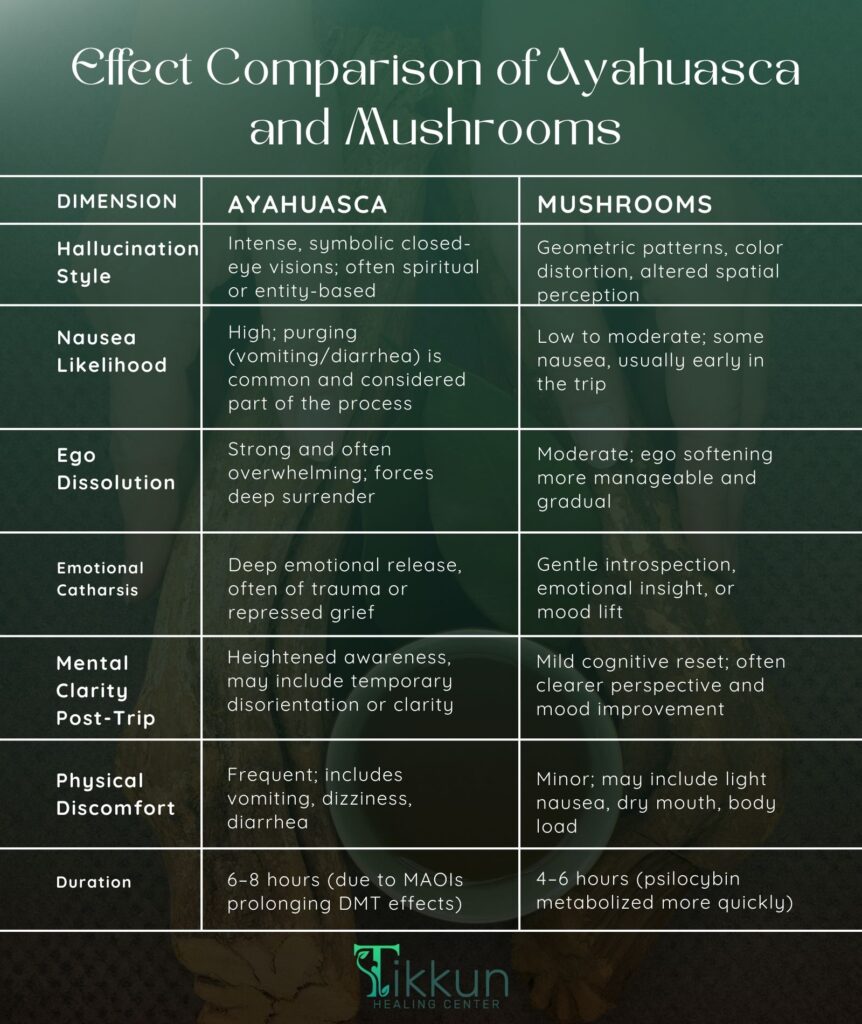
The list below compares these effects across physical, mental, and emotional dimensions.
- Hallucination Style: Ayahuasca—Intense, closed-eye visions, symbolic, spirit-oriented. Mushrooms—Softer visuals, geometric patterns, altered perception.
- Nausea Likelihood: Ayahuasca—High purging is common and expected. Mushrooms—Low to moderate, some users experience nausea.
- Ego Dissolution: Ayahuasca—Strong, often overwhelming, forces surrender. Mushrooms—Moderate, induces detachment, but is more manageable.
- Emotional Catharsis: Ayahuasca—Deep release of trauma, grief, or repressed emotion. Mushrooms—Gentle introspection, occasional emotional clarity.
- Mental Clarity Post-Trip: Ayahuasca—Heightened self-awareness, clarity, or temporary disorientation. Mushrooms—Mild mental reset, improved mood, or perspective.
- Physical Discomfort: Ayahuasca—Vomiting, diarrhea, and dizziness are common. Mushrooms—Minor discomfort, dry mouth, light nausea.
- Duration: Ayahuasca—6–8 hours due to MAOIs in the brew. Mushrooms—4–6 hours, psilocybin metabolizes more quickly.
The effects of ayahuasca vs mushrooms comparison states stronger purgative and introspective outcomes with ayahuasca, while psilocybin mushrooms offer a gentler psychological entry point with fewer physical side effects. Both have clinical relevance in psychedelic-assisted therapy.
Is Ayahuasca better for spiritual growth than mushrooms?
Yes, ayahuasca is better for spiritual growth than mushrooms, according to many users and traditional practices. Ayahuasca is embedded in Amazonian ritual, guided by shamans and supported by centuries of spiritual tradition.The brew’s purgative effects, symbolic visions, and deep emotional release are seen as tools for confronting trauma and initiating ego dissolution, leading to profound transformative experiences.
In contrast, Psilocybin mushrooms offer a more introspective and natural journey, often without a ceremonial structure.While mushrooms facilitate insight and emotional clarity, they tend to be less immersive and less physically intense.Studies such as those published in Frontiers in Pharmacology (2016) suggest that ayahuasca promotes long-lasting changes in existential outlook, spiritual openness, and life purpose.
Ayahuasca ceremonies prioritize intention setting, guided integration, and sacred space, which many believe improve its capacity for deep spiritual healing. Though both substances support growth, ayahuasca’s structure, depth, and cultural framework make it more aligned with spiritual evolution in the context of ritual medicine.
How do preparation requirements differ between ayahuasca and mushrooms?
Ayahuasca and mushroom preparation requirements differ in ritual depth, dietary discipline, and facilitator presence. Ayahuasca demands structured planning and ceremonial care, while mushrooms are more accessible with minimal setup.
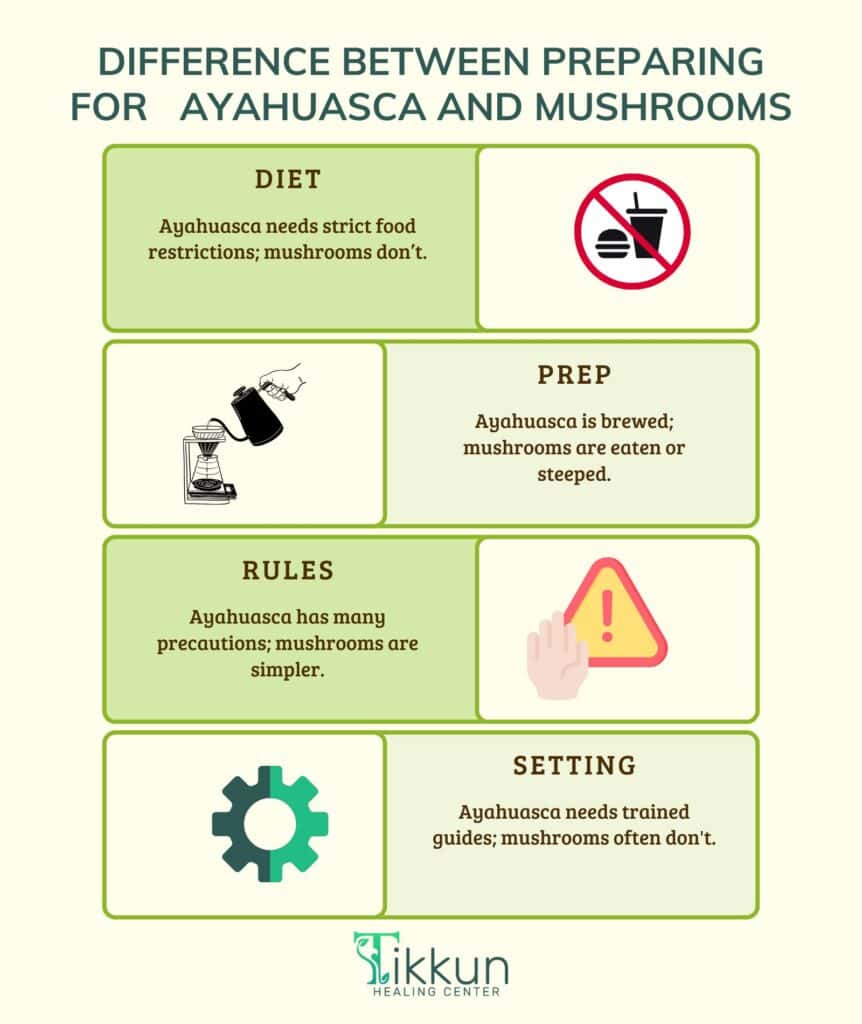
Listed below are key preparation differences.
- Ayahuasca requires a dietary regimen (dieta): Ayahuasca use involves a strict dieta that eliminates pork, caffeine, processed foods, and fermented products to reduce MAOI risks and improve sensitivity to the medicine.
- Ayahuasca involves combining Banisteriopsis caapi with DMT-containing plants: Preparation includes slow brewing of B. caapi with Psychotria viridis or similar DMT-rich leaves. The process takes hours and ensures proper alkaloid activation.
- Mushrooms are usually consumed raw, dried, or in tea: Psilocybin mushrooms need no preparation beyond drying or steeping in hot water. They require no chemical combination or extensive cooking.
- Mushrooms need fewer pre-use restrictions: Mushroom use does not require dietary restrictions or MAOI safety checks. However, avoiding alcohol and overstimulation before use is advised for mental clarity.
- Ayahuasca ceremonies require trained facilitators: Ayahuasca must be administered in a ceremonial setting led by experienced shamans or facilitators for safety and psychological containment. Mushroom sessions are often solo or informal, with fewer structured protections.
What are the risk comparisons of ayahuasca and mushrooms?
The risk comparison of ayahuasca and mushrooms is based on their chemical interactions, psychological intensity, and physical burden.
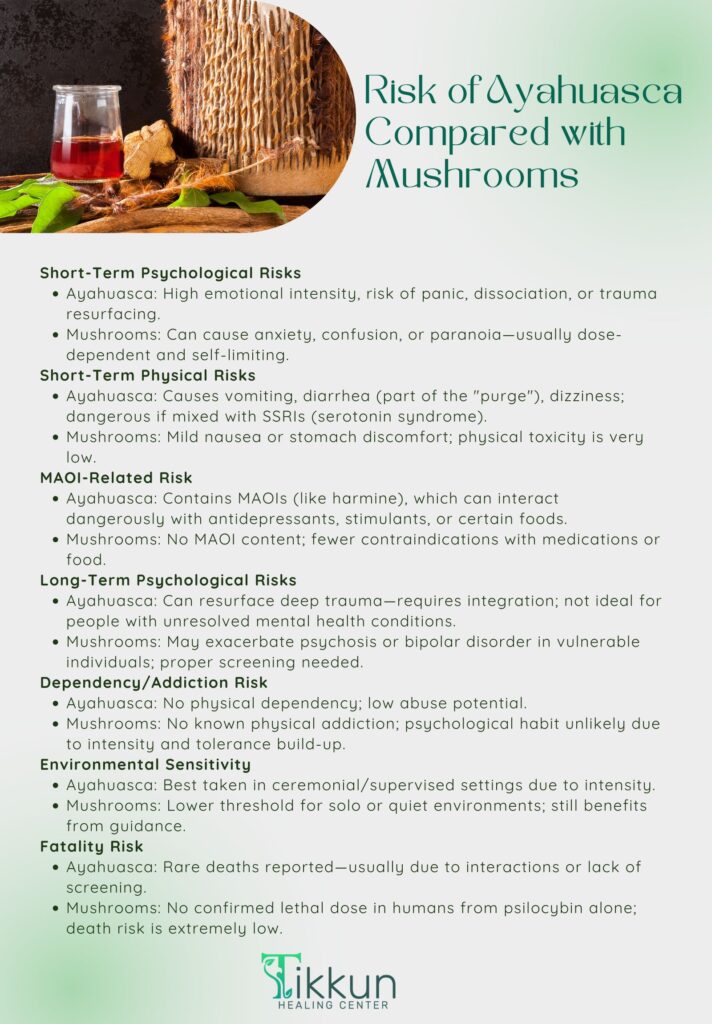
The list below compares their short-term and long-term risks.
- Short-Term Psychological Risks:
- Ayahuasca—High emotional intensity, risk of panic, dissociation, or trauma resurfacing.
- Mushrooms—Anxiety, confusion, and rare cases of paranoia.
- Short-Term Physical Risk:
- Ayahuasca—Vomiting, diarrhea, dizziness, and serotonin syndrome if mixed with SSRIs.
- Mushrooms—Mild nausea, rare vomiting, low risk of toxicity.
- MAOI-Related Risk.
- Ayahuasca—High interaction with antidepressants, stimulants, or tyramine-rich foods.
- Mushrooms—None, psilocybin does not involve MAOIs.
- Long-Term Psychological Risk.
- Ayahuasca—Possible resurfacing of unresolved trauma requires integration.
- Mushrooms—Worsen underlying conditions (e.g., psychosis) if unscreened.
- Dependency/Addiction Risk.
- Ayahuasca—No physical dependency reported.
- Mushrooms—No physical dependency, psychological habit unlikely.
- Environmental Sensitivity.
- Ayahuasca—Requires a supervised, secure setting for safety.
- Mushrooms—Lower risk, manageable in low-stimulus settings.
- Fatality Risk.
- Ayahuasca—Rare, but exists in cases of poor screening or mixing substances.
- Mushrooms—Extremely rare, no known lethal dose in humans from psilocybin alone.
Does ayahuasca have more therapeutic potential than mushrooms?
Yes, ayahuasca has more therapeutic potential than mushrooms in the treatment of trauma-related conditions such as PTSD, deep emotional wounds, and addiction. Clinical studies, including a 2018 trial published in Psychological Medicine, showed that a single session of ayahuasca led to reductions in depression and stress symptoms, especially among those with treatment-resistant depression. Ayahuasca’s combination of DMT and MAOIs induces a prolonged introspective state that supports emotional catharsis and psychological restructuring.
While psilocybin also demonstrates therapeutic value, particularly in managing end-of-life anxiety, major depressive disorder, and substance use disorders, its effects are less purgative and more cognitive. A 2020 study in JAMA Psychiatry confirmed psilocybin’s efficacy in reducing depressive symptoms after two supervised doses.
Ayahuasca’s structured ceremonial use, guided integration, and neurochemical impact on mood regulation (via serotonin and sigma-1 receptors) give it a broader therapeutic scope for individuals needing deep emotional release, whereas psilocybin is preferred for shorter-term cognitive and emotional clarity. Both substances offer clinical promise, but ayahuasca’s ritual depth and somatic intensity position it as more potent for transformative healing.
How does Ayahuasca compare with Psilocybin?
Ayahuasca and psilocybin differ in chemical composition, experiential depth, and therapeutic application. The table below compares them across biological, psychological, and clinical dimensions based on peer-reviewed studies and traditional use.
| Category | Ayahuasca | Psilocybin |
| Biological Makeup | Contains DMT (from Psychotria viridis) + MAOIs (from Banisteriopsis caapi) | Contains psilocybin, metabolized into psilocin |
| Experience Intensity | Deep emotional purging, visions, and ego dissolution | Euphoric introspection, altered perception, gentler visuals |
| Duration | 6–8 hours, with prolonged emotional aftereffects | 4–6 hours, steady resolution phase |
| Emotional Impact | Cathartic release, trauma surfacing, intense processing | Mood uplift, reflection, and less confrontational |
| Ceremonial Use | Shamanic rituals, guided sessions, and set intentions | Less ritualized, used in modern clinical or personal settings |
| Therapeutic Research | Shown to improve PTSD, depression, and addiction recovery | Proven effective in treating depression and anxiety |
| Neurochemical Pathways | Affects serotonin and sigma-1 receptors, modulates mood and trauma circuits | Acts on 5-HT2A serotonin receptors, alters the default mode network |
| Physical Reactions | Vomiting, diarrhea, and dizziness are common (purging) | Nausea is less frequent, a minimal physiological reaction |
| Access and Legality | Restricted; legal in religious contexts or decriminalized areas | Schedule I: some cities/states allow research or decriminalize |
Ayahuasca vs psilocybin comparisons show ayahuasca offers stronger emotional release and deeper ritual support, while psilocybin provides a safer, shorter, and more cognitively manageable experience. Both are backed by clinical data and serve different therapeutic needs.
Tikkun Healing Center Editorial Team
The Tikkun Healing Center Editorial Team is a dedicated group of writers, researchers, and wellness experts committed to delivering insightful, accurate, and inspiring content. With a deep understanding of holistic health, mental well-being, and spiritual growth, the team curates articles, guides, and resources that educate and empower readers on their healing journey. Each member brings a unique perspective, blending professional expertise with compassionate storytelling to ensure that every piece reflects Tikkun’s mission of nurturing mind, body, and spirit. Their collaborative approach emphasizes authenticity, evidence-based practices, and the promotion of meaningful, positive change in the lives of their audience.